Silk Kimono Rental in Asakusa (Shoken — Pure Silk)
Shoken means pure silk. Of our ten styles the iromuji is the one described as pure silk, from ¥13,000 with a fukuro obi, zori, bag and basic hair styling included.
- Iromuji from
- ¥13,000
- Security deposit
- ¥10,000
- Return by
- 17:00
- Make-up
- ¥4,500
Gallery
Prices
| Item | What is included | Price |
|---|---|---|
| Iromuji | Solid Color Kimono | From¥13,000 |
Shoken means pure silk — cloth woven entirely from silk thread, with no polyester in it. It is also the name of our main store in Asakusa. This page is about the material rather than the format: what silk does differently on the body and in front of a camera, and which piece in the Ennichi lineup is described as pure silk.
What does shoken actually mean?
The word is written with the characters for “true” and “silk”, and in a kimono shop it means one thing: the cloth is silk all the way through. It is a statement about the thread, not about the shape of the garment or the occasion it suits. Rental pieces built for hard daily wear are often woven from polyester instead, because polyester shrugs off rain and goes through a washing machine.
Because the word describes cloth, it sits on a different axis from most of the words on our price list. Homongi, iromuji and tomesode are formats: they tell you how formal a garment is and where the pattern falls on it. Silk is the fibre. The two cross, and any format can in principle be woven in silk. Which format suits your occasion is a separate question, and the formal kimono page answers it — this page stays with the cloth.
What changes when the cloth is silk?
Weight and fall, first. Silk is heavy for how thin it is, so it hangs close in long vertical lines rather than standing away from the body. The hem swings when you walk and settles when you stop. Standing still for a photograph, you get a straight silhouette from shoulder to ankle without anyone arranging it for you.
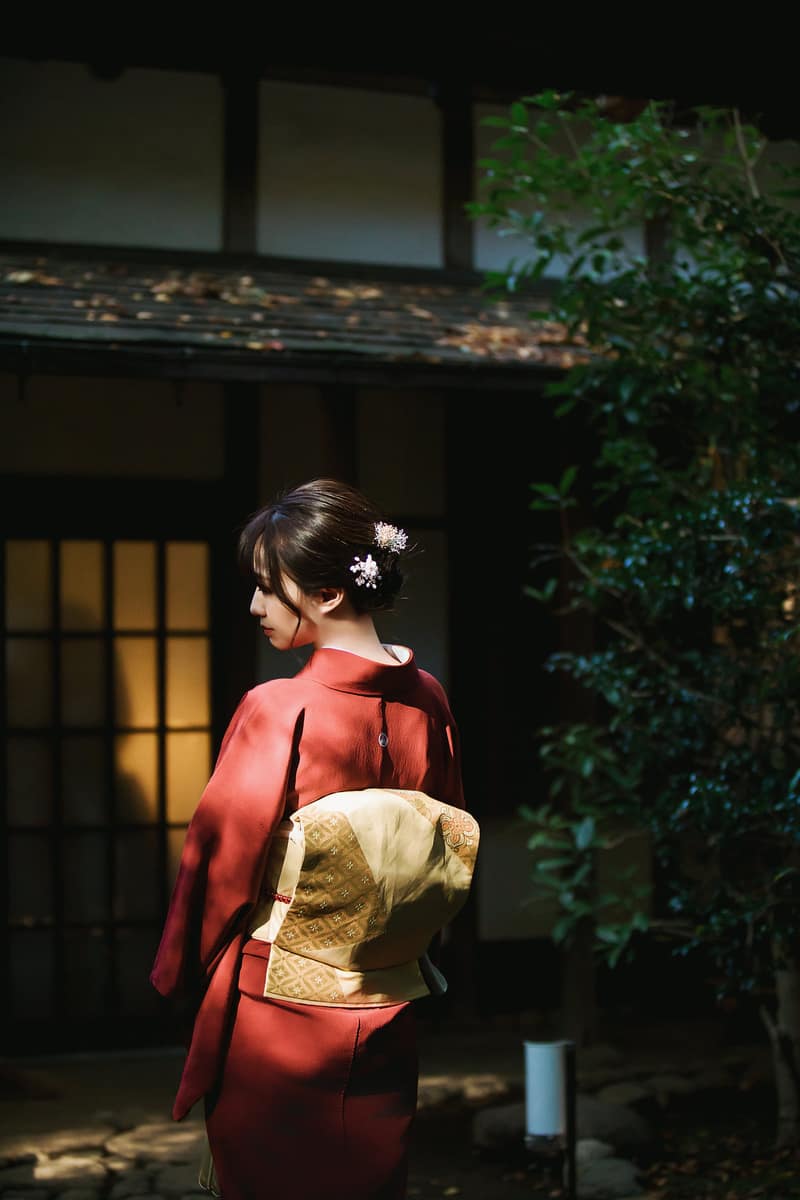
Then light. A synthetic weave reflects light in one flat sheet; silk breaks it up, because the thread itself is triangular in cross-section. The result is a soft, uneven sheen. In photographs that reads as depth — one sleeve of a red kimono comes out as three or four reds, and the fold lines stay visible instead of blowing out to white.
Then wearing it for a whole day. Silk moves moisture and air, so it feels cool in warm weather and holds warmth in cold, which matters more than it sounds when you are outdoors from morning until the light goes.
Which Ennichi kimono is pure silk?
The iromuji. In our lineup it is the single-colour piece made in pure silk, and it starts at ¥13,000. A fukuro obi — the wider, dressier belt — comes with it at no extra charge, so the figure you see is the whole outfit: kimono, obi, zori sandals, a bag and basic hair styling.
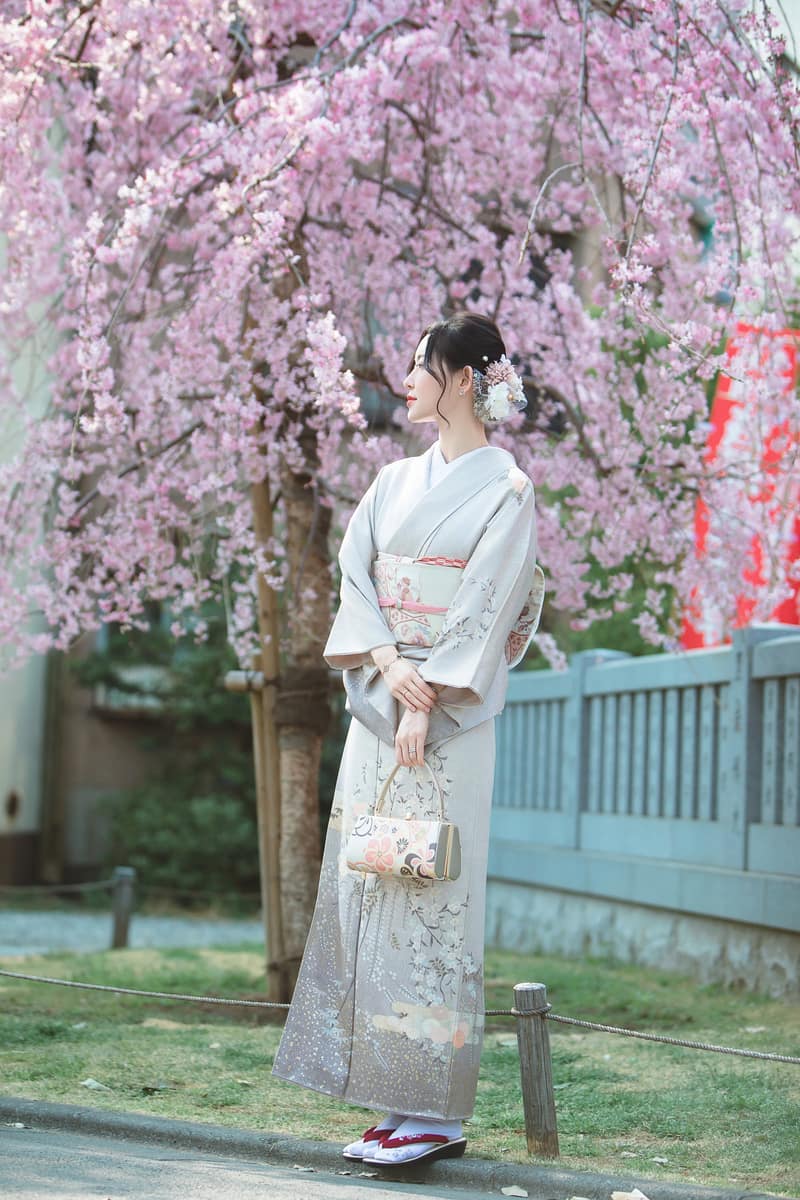
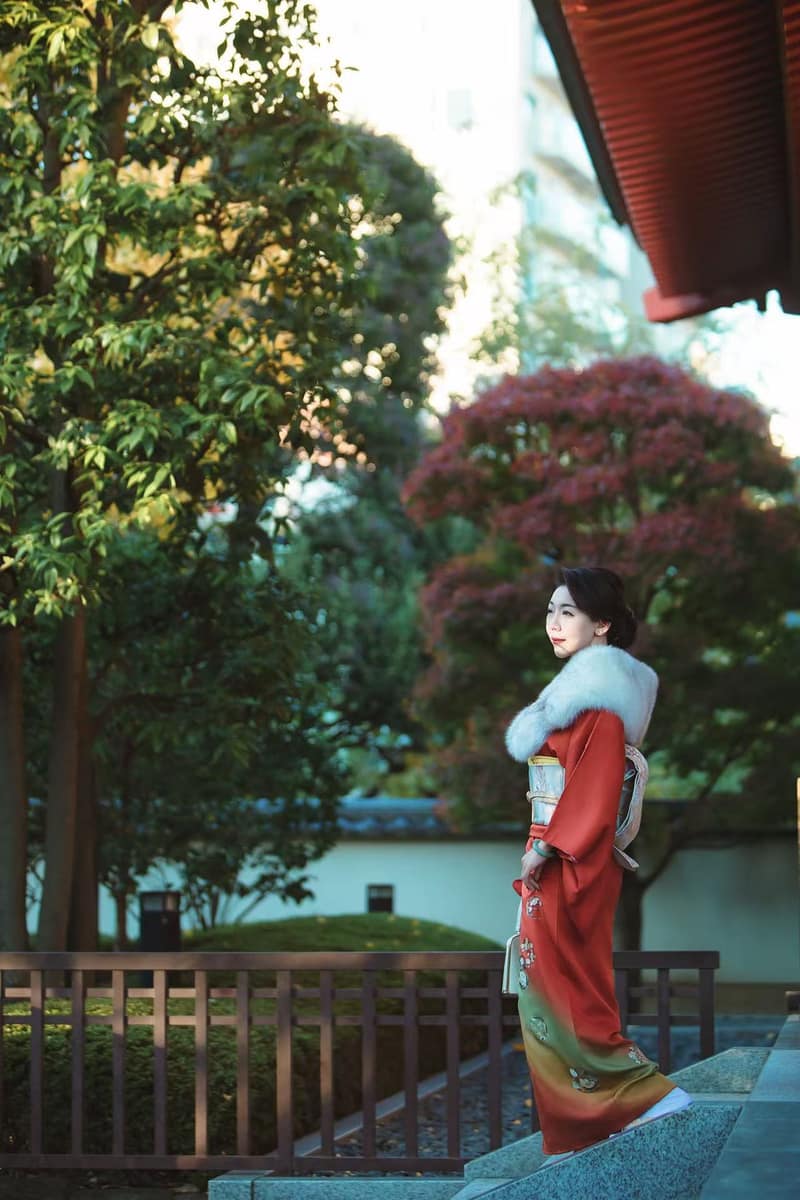
An iromuji is also the clearest way to see what silk does. There is no pattern to look at, so all that is left is the colour, the sheen and the way the cloth falls. Photographers like it for the same reason: nothing on the fabric competes with the face.
The rest of our price list names formats rather than fabrics. If the fibre of one particular piece matters to you, ask us before you book rather than on the day.
Where do I rent it?
Our main store carries the name: Shoken, two minutes from exit A1 of Asakusa Station on the Tsukuba Express. Ennichi has two shops in Asakusa and the prices are the same at both; the store page sets out every station route in full.
What about the deposit and the return?
While you are out we hold a security deposit of ¥10,000 per person. It is a holding amount rather than a fee, separate from the rental price, and it comes back in full when the kimono does.
Same-day returns close at 17:00. To keep the outfit into the evening, extend to a next-day return for ¥1,100 per person and bring it back by 14:00.
Booking a silk set
Your booking is confirmed once the reservation deposit is paid — ¥1,000 for one to four guests, ¥2,000 for five to eight. Changes and cancellations are free until 20:00 the day before your visit.
Walk-ins are welcome, though guests with reservations are dressed first, and weekend mornings go early. Make-up at ¥4,500 per person must be reserved in advance; a more elaborate hairstyle at ¥1,700 per person can normally be added when you arrive. The obi upgrades — ¥1,500 for an otaiko knot, ¥3,000 for a decorative one — belong to the half-width-obi plans and never apply to the iromuji, which already includes a fukuro obi.
Frequently asked questions
Which of your kimono are pure silk?
The iromuji is the piece our lineup describes as pure silk, dyed a single colour and starting at ¥13,000. The rest of the price list is organised by format rather than by fabric, so if the fibre of a particular piece matters to you, ask us before you book.
What does pure silk change compared with a synthetic kimono?
Weight and light. Silk is heavy for how thin it is, so it hangs in long vertical lines and the hem swings as you walk. It also breaks up light instead of reflecting it flatly, which is why a single sleeve photographs as several shades of the same colour.
Does a silk kimono cost more here?
Our price list is set by style, not by fabric. Iromuji starts at ¥13,000 and komon at ¥6,000, and prices are the same at both Asakusa stores. Every price covers the kimono set, zori sandals, a bag and basic hair styling.
Is the obi included with the iromuji?
Yes, a fukuro obi comes with it at no extra charge. The plans where a half-width obi is standard and the upgrade is charged — ¥1,500 for an otaiko knot, ¥3,000 for a decorative one — are lace, komon and short-sleeve furisode.
How much is the deposit, and when do I return it?
A security deposit of ¥10,000 per person is held while you are out and returned in full with the kimono. Same-day returns close at 17:00; extend to the next day for ¥1,100 per person and return by 14:00.
Stores
- Main Store (Shoken)
- Asakusa Sta. Exit A1: 2 min walkGoogle Maps
- Kaminarimon Store
- Asakusa Sta. Exit A4: 3 min walkGoogle Maps
- Opening hours
