Kimono Rental in Asakusa — Ennichi Shoken (Main Store)
Ennichi Shoken, our main store, is a two-minute walk from exit A1 of Asakusa Station on the Tsukuba Express. It is open 09:00 to 17:30, and same-day returns close at 17:00.
Main Store (Shoken)
- Address
- THE ASAKUSA RESIDENCE 1F51-11-1 Asakusa, Taito City, TokyoGoogle Maps
- Phone
- +81-80-2890-6902
- Opening hours
Access
- TX Asakusa Sta. Exit A1: 2 min walk
- Ginza Line Tawaramachi Sta. Exit 3: 5 min walk
- Asakusa Line Asakusa Sta. Exit A4: 8 min walk


Shoken is the main Ennichi Kimono store. It is a two-minute walk from exit A1 of Asakusa Station on the Tsukuba Express, and also within walking distance of the Ginza Line and the Asakusa Line — the better connected of our two Asakusa shops. The name shoken means pure silk.
Which station should I use?
Three lines reach us, and which one is quickest depends on where you start.
From Akihabara or Tsukuba, take the Tsukuba Express to Asakusa Station and leave by exit A1: a two-minute walk, and the shortest route to our door. From Ginza, Ueno or Shibuya, take the Ginza Line to Tawaramachi Station, exit 3, and walk five minutes. From Haneda or the Oshiage side, take the Asakusa Line to Asakusa Station, exit A4, and walk eight minutes.
Two different stations here are called Asakusa, on different lines, and they are not the same building. If your navigation app is quoting a walk far longer than the times above, you are probably standing at the other one.
How do I walk from Shoken to the Asakusa landmarks?
Head east from our door and Kaminarimon, the great outer gate, is about five minutes away. Pass under it, walk the length of the Nakamise arcade, go through the Hozomon gate and you reach the main hall of Senso-ji — roughly eight minutes from the shop. Shoken sits on the near side of Kaminarimon, so the temple approach unrolls in its proper order from the moment you set off.
The five-storey pagoda stands to the west of the main hall. Cut east through the grounds instead and you come out at Azumabashi bridge on the Sumida River, also about eight minutes from us. From the bridge Tokyo Skytree rises straight ahead on the far bank, and Sumida Park runs north along the water.
What you have just read covers the first few minutes after you leave the shop. Where to stand and when the crowds thin out belong to our guide on photo spots in Asakusa; how to spend the whole day belongs to the one-day Asakusa itinerary.
How does the walk from here change with the seasons?
In spring the cherry trees of Sumida Park line the river bank — eight minutes to Azumabashi, then north into the blossom. Summer sun is fierce, so string the walk together through the roofed Nakamise arcade and the shade of the temple grounds. Autumn air is dry and the outline of Skytree from the bridge is at its sharpest. In winter the crowds ease off, and the grounds just after opening are the quietest they get all year.
What can I rent here?
Ennichi rents ten styles in all, and the prices are the same at both Asakusa stores.
The formal styles, worn with a fukuro obi, start at ¥16,000 for homongi, ¥13,000 for iromuji, ¥16,000 for both colour and black tomesode, and ¥25,000 for furisode. The casual styles, worn with a half-width obi, start at ¥6,000 for komon and ¥7,000 for a lace kimono or a short-sleeve furisode. Men’s kimono start at ¥8,000 and children’s at ¥5,500.
Every price includes the kimono, a bag, shoes and basic hair styling.
What is pure silk, and why does it matter?
Shoken means fabric that is 100% silk. Against a kimono woven from polyester or another synthetic, silk changes its sheen with the angle of the light and falls closer to the line of the body. The fibre itself traps air, so it builds up little static and feels gentler against the skin.
Silk is also the more delicate of the two: water and friction mark it more readily, and a synthetic is the easier thing to wear without thinking. Texture in photographs, or a carefree afternoon — deciding which one you are after before you arrive makes the choice at the rail much quicker. Our silk rental page carries on with the fabric side of the question.
What occasions does this store suit?
For a day of walking around Asakusa, komon is the easiest thing to wear. The half-width obi is light, your stride stays free, and you can move through the Nakamise crowd without thinking about it.
For an anniversary, a celebration, or a day when you are attending someone else’s, the candidates are homongi, iromuji, colour and black tomesode, and furisode. Settling the level of formality first and looking at colours second tends to get you there faster. Three lines reach Shoken, so it also suits a day when your party arrives from three different directions and gathers here before setting out.
If you want photographs of the day, there is an outdoor location shoot and a studio shoot. Photography is by advance booking.
What about families and larger groups?
Once the party grows, the first problem is not the kimono — it is where to meet. Shoken can be reached on foot from the Tsukuba Express, the Ginza Line and the Asakusa Line, so people arriving at different stations can converge at the shop.
The reservation deposit is ¥1,000 for one to four guests and ¥2,000 for five to eight; the booking is confirmed once it is paid.
Children’s kimono are sized far more tightly than adult ones, so tell us the child’s gender and height when you book.
What time should I arrive?
Aim for the first dressing slot of the morning. We open at 09:00 and close at 17:30. Right after opening, the fitting rooms are quiet, the racks are still untouched, and you have the whole day ahead of you.
Same-day returns close at 17:00, an hour before we close. If you cannot make 17:00, the booking switches to a next-day return by 14:00, with a late fee of ¥1,100 per person.
What happens once I arrive at Shoken?
After check-in you choose the kimono. Settling on a mood first and fitting the size afterwards is the smoothest order. Dressing follows, then hair styling. The clothes you came in and your day bag are handed over at this point.
As you set off we take a security deposit of ¥10,000 per person, or ¥20,000 for a premium furisode. It is held rather than charged, and returned in full when the kimono comes back.
Everything from booking through the day itself to the return is laid out in our guide to the rental process. This section covers only the stretch between walking through our door and walking back out of it.
What happens to my luggage and my own clothes?
We store them free of charge while you are out, so there is nothing to carry around Asakusa. Valuables stay with you — please look after those yourself. Large suitcases are the one thing we cannot take: if you are arriving straight from a train, leave them in a station coin locker or with the ecbocloak app first.
We accept WeChat Pay, Alipay, credit cards, PayPay and cash.
What should I know before I book?
If you have your heart set on a particular kimono, we can hold it for you once the rental is paid in full. Note that the design cannot be swapped once you arrive, so choose with that in mind — and if a set is stained or damaged before your visit, we contact you straight away.
Two sizing notes are worth raising early rather than on the day. If you are taller than 180 cm, or unsure about the fit for any other reason, ask us before you book. And for a child’s kimono, tell us the child’s gender and height when you book: sizing is far tighter than it is for adults.
What you can rent at this store
- Komon Kimono Rental in Asakusa
- Furisode Kimono Rental in Asakusa
- Lace Kimono and Short-Sleeve Furisode Rental in Asakusa
- Formal Kimono Rental in Asakusa (Homongi, Iromuji, Tomesode)
- Silk Kimono Rental in Asakusa (Shoken — Pure Silk)
- Men's Kimono Rental in Asakusa
- Kids and Family Kimono Rental in Asakusa
- Couple Kimono Rental in Asakusa
- Group Kimono Rental in Asakusa
- Outdoor Kimono Photoshoot in Asakusa
- Kimono Studio Photoshoot in Asakusa
Related questions
- Kimono Rental near Kaminarimon — Ennichi Kaminarimon Store
- How does kimono rental in Asakusa work, from booking to return?
- What time do I have to return the kimono in Asakusa?
- What is included in the kimono rental price in Asakusa?
- Silk Kimono Rental in Asakusa (Shoken — Pure Silk)
- Formal Kimono Rental in Asakusa (Homongi, Iromuji, Tomesode)
Ambience
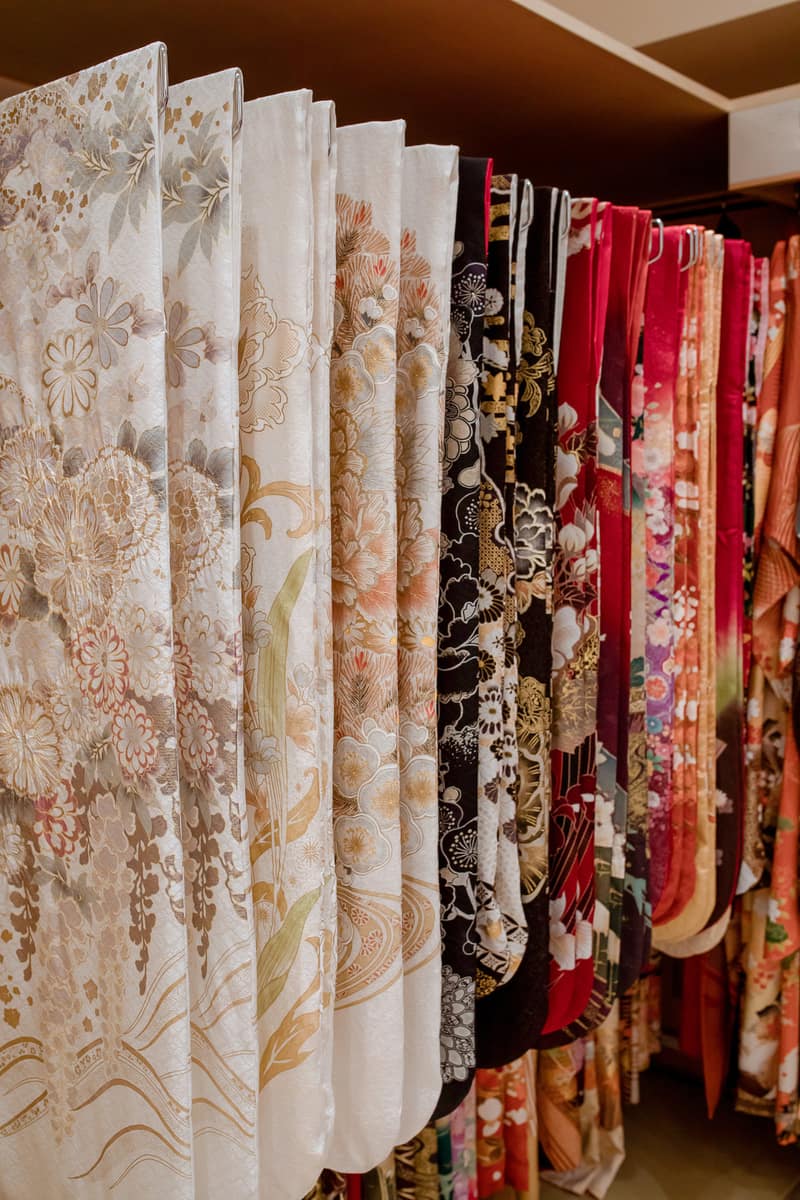
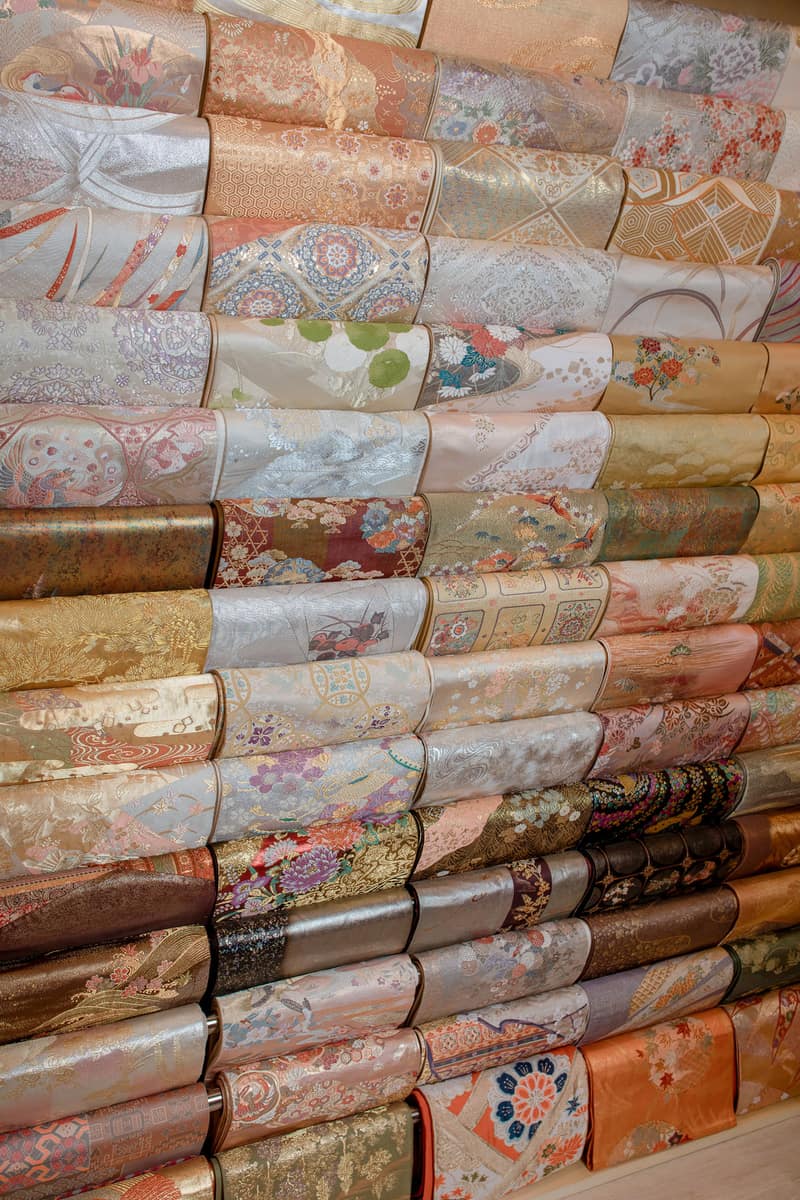
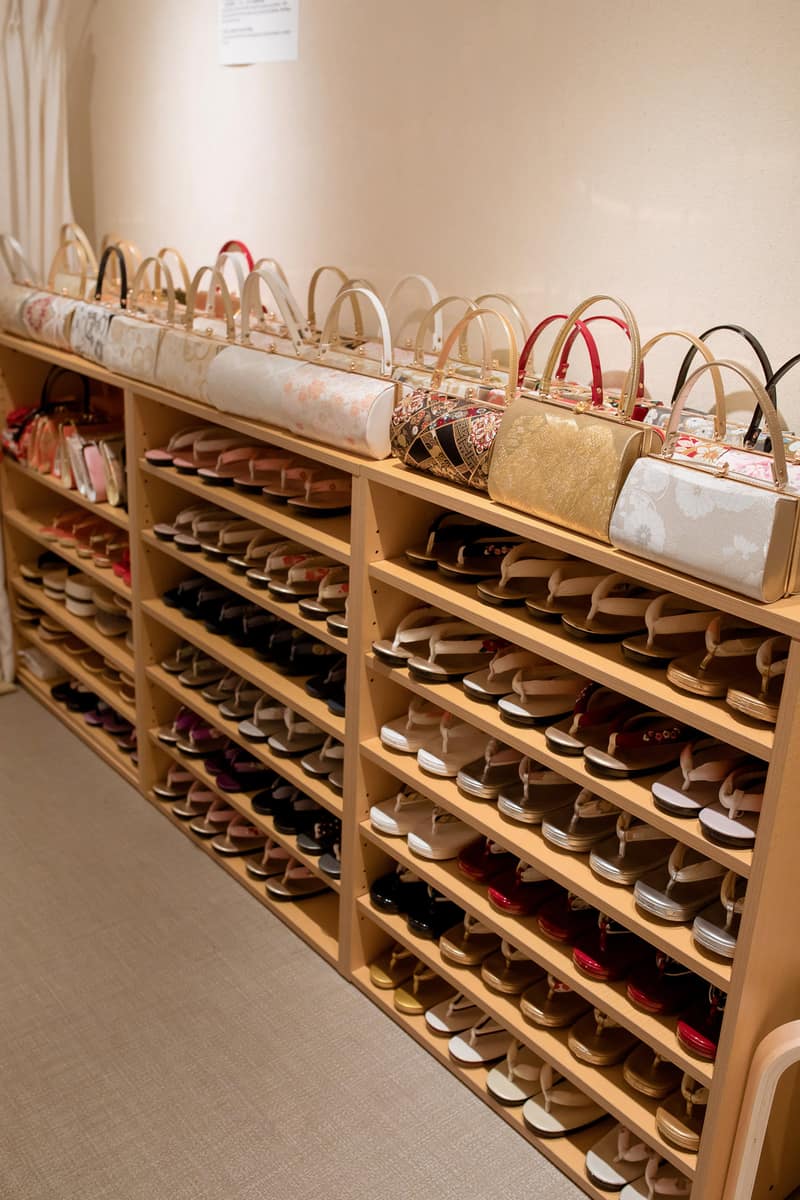
* Photos represent our brand atmosphere. Interior layout may vary between stores.
Frequently asked questions
Which station exit is closest to Shoken?
Exit A1 of Asakusa Station on the Tsukuba Express, two minutes on foot. From the Ginza Line, use Tawaramachi exit 3 and walk five minutes; from the Asakusa Line, use Asakusa exit A4 and walk eight minutes.
How far is Kaminarimon from Shoken?
About five minutes on foot, heading east from our door. Carry on through the Nakamise arcade and the main hall of Senso-ji is roughly eight minutes from the shop. Azumabashi bridge over the Sumida is also about eight minutes, and Tokyo Skytree stands on the far bank.
What does the word shoken mean?
It means pure silk — fabric that is 100% silk. Next to a synthetic kimono, silk shifts its sheen as the light moves and falls closer to the line of the body. It also builds up far less static. Our main store takes its name from that word.
What time do I need to return the kimono?
Same-day returns close at 17:00. If you cannot make that, the rental becomes a next-day return by 14:00 with a fee of ¥1,100 per person, so tell us at the counter if you already know you want the evening.
Can you keep my luggage while I am out in the kimono?
We hold your clothes and day bags while you are out, free of charge, and ask you to keep valuables with you. Large suitcases are the exception — leave those in a station coin locker or with the ecbocloak app before you come.
